115 analytes, one panel: a conversation on innovation in biomarker discovery
Join K Sean Kimbro, Professor and Director of RCMI and Kenisha L Webb, Research Lab Manager, both at the Morehouse School of Medicine, to discuss how the MILLIPLEX® PLEXpedition Screening Panel and Luminex® xMAP® INTELLIFLEX® system are advancing their biomarker research by enabling comprehensive multi-analyte studies, addressing common screening challenges and providing practical advantages through efficient measurement of multiple biomarkers in one test rather than separate individual assays.
Podcast transcript:
[00:06] Emma Hall: Hello and welcome to our podcast episode exploring innovation in biomarker discovery, which today is sponsored by Merck KGaA, Darmstadt, Germany. The Life Science business of Merck operates as MilliporeSigma in the U.S. and Canada. I’m your host Emma Hall, and today, I’m joined by Dr Sean Kimbro and Kenisha L Webb, who both work in the Department of Microbiology, Biochemistry and Immunology at the Morehouse School of Medicine. Thank you both so much for joining us.
[00:38] Dr Kimbro and Kenisha: Thank you.
[00:40] Emma Hall: To kick us off, please could you introduce yourselves and your roles in the Department of Microbiology, Biochemistry and Immunology at the Morehouse School of Medicine?
[00:45] Dr Kimbro: So I’m Sean Kimbro. I’m a Professor in the Department of Microbiology, Biochemistry and Immunology, been here a couple of years. The Morehouse School of Medicine is a Historically Black Medical School here in Atlanta, Georgia. We are conducting experiments and research addressing health disparities and the resolution of health disparities in underserved populations. We also are conducting a project called the Discovery of Us™. And the Discovery of Us™ is a project that I’ll let Kenisha talk to a little bit more, but it is a project that originated here at Morehouse School of Medicine and is kind of the data that we’re seeking to pull out and pull from the [MILLIPLEX®] PLEXpedition. So I’m going to let Kenisha say something about her.
[01:32] Kenisha: My name is Kenisha Webb. I am the laboratory manager for Dr Sean Kimbro’s lab, where we do a little bit of that drug discovery work and molecular biology work. I oversee the operations of his lab while also managing some of my own projects and data analysis. He mentioned the Discovery of Us™ project that we, I think we launched it about a year ago, where we go out into metro Atlanta and rural Georgia and collect participant samples while also conducting surveys, giving back genetic ancestry, as well as different biomarkers. With this opportunity, we have actually used some of our Discovery of Us™ samples with these MILLIPLEX® as well as PLEXpedition assays. We are huge fans of them.
[02:30] Emma Hall: In what ways do you expect the MILLIPLEX® PLEXpedition Screening Panel to benefit you in driving your research forward in the next year or so?
[02:39] Dr Kimbro: So this provides a good opportunity because we have such a large number of samples. It’ll let us increase our number of biomarkers. It uses so little volume that it allows us to stretch out a limited sample and precious samples. So probably in the next 12 months or so, this would definitely help us with discovery of ancestry and environmentally linked inflammatory markers and metabolic signatures, as well as identify large numbers of biomarkers across multiple individuals from different regions of Georgia. And then ultimately, we’ll be integrating this data into our protein work, into our genomic work and our survey data that Kenisha mentioned earlier.
[03:20] Emma Hall: How has the use of the Luminex® xMAP® INTELLIFLEX® system changed how you measure and analyze your data in comparison to other Luminex® instruments?
[03:29] Kenisha: For starters, it’s a lot more efficient than the other Luminex® instruments. We’re familiar with the 100 and 200 models, and it takes a lot to just simply design your experiment within the system, as well as exporting that data and analyzing it. So with the INTELLIFLEX®, everything is a lot more user-friendly when trying to set up your plates, your acquisitions, your panels. It’s a lot more efficient, and the data is just a lot cleaner the way that it’s exported. It breaks it up in different data types, so it’s a lot easier to transfer that over to our curve fitting software that we use. It’s a lot easier to just simply look at the raw data. So it just makes the data analysis as well as the performance of the assays a lot more cleaner, efficient and quicker than the old instruments.
[04:30] Emma Hall: Yeah, absolutely.
[04:31] Emma Hall: Could you both share any preliminary insights that have emerged from using this panel in multi-analyte studies??
[04:36] Kenisha: So I did have the opportunity to set up some assays this week and finally use the PLEXpedition. It was very exciting and a little overwhelming because I think the largest multiplex assay we’ve purchased was probably a 48-plex, so with this being 115 analytes, that was a lot of data to look at. So the experimental approach that we had because we have so many samples and we look at all of these different serum biomarkers, we case-matched our samples based on hemoglobin A1C levels and separated the samples off of sex. So I was able to actually see differences amongst many of those analytes, specifically those inflammatory markers, those cytokines. I was able to see differences in the analyte levels amongst those participants based off of their hemoglobin A1C levels being high or low. So that was pretty exciting. I only got to do about 80 samples, 40 samples fit on each plate in duplicates. I was only able to complete two plates so far, but seeing that difference, that slight difference, was pretty exciting. So I’m excited to see what the rest of that data will look like, especially when we merge all of the samples that we were planning to measure.
[06:06] Dr Kimbro: I think as we move forward, we are pretty confident that we’re going to continue to see some differences and that makes it very exciting, especially some of the populations, some of the biomarkers that have not been looked at in some of these populations, those being rural versus urban, as well as African-American versus other ethnic groups and racial groups.
[06:27] Emma Hall: What are some common challenges researchers face in biomarker screening and qualification, and how does this product help address them?
[06:34] Dr Kimbro: So I think, you know, you have a general problem that comes into play when you start to look at so many, and I think we’re starting to look at questions of sample volume and how much sample you have left from your collection, your cohort. We also are looking at the issues of quality control. What’s nice is that you have a set set of parameters that you can apply to across the entire collection. Right now we have ~800 samples, so that becomes very critical and they’re limited. You can only get these samples once. So that also puts up some challenges. Some of those common challenges that you incur is reproducibility. So you don’t have a lot of batch differences and the fact that the volumes are so small that it allows us to go back if we do have to repeat something we can without exhausting the biobank. So I think those are some of the major pieces. I think also not having, like I said, the most we’ve ever done was 40 plus. This opportunity now is to cover 100 plus [and] allows us to really get at some novel pathways and to really start probing back into those pathways that might be involved, in this particular case diabetes or related to environment.
[07:51] Kenisha: I would just like to agree with Dr Kimbro on the sample sizes. That is always a big challenge for us when we’re collecting these samples and processing them. When you’re dealing with patient data sometimes it’s difficult to get a large enough sample to do further experimentation with. One of the limitations is trying to make sure that we have enough sample to to do the actual research.
[08:17] Emma Hall: Amazing, thank you both so much.
[08:19] Emma Hall: You covered some of the current limitations, particularly sample size. What are some of the practical advantages of using a multiplex kit with such a broad analyte range?
[08:29] Kenisha: Well for starters it is definitely that sample size. Most ELISAs, which is what we were using previously before we were introduced to or started actually using the Luminex® instruments more, you can use anywhere from 50 to 100 microliters in duplicates for these ELISAs. So when you are using these multiplex assays or specifically this PLEXpedition [screening panel], you are only using 25 microliters in duplicates. So that’s half of what you will use for the ELISAs. In addition to that, you can measure two plus analytes within a B region within that one sample. So that just makes it all the better that we’re able to collect so much data from one sample at one time. So it reduces the cost that you’re spending on these assays. It reduces the time you spend to actually do the assays because most times I think we’ve probably used about three or four different types of MILLIPLEX® assays and most of them you can either analyze them within that same day or it’s just simply an overnight incubation. So you’re taking three day-long experiments and chopping them into a day or two. The variability, the cost, the high throughput, all of [those] are major advantages of using these multiplex and PLEXpedition assays.
[09:57] Emma Hall: Perfect, thank you Kenisha. Dr Kimbro, would you like to add anything?
[10:01] Dr Kimbro: No, I think we’re good. She covered everything. I think she emphasized, like I said, the volume piece is very good. The flexibility and screening a large number. So it does allow you to kind of support hypothesis generation that you wouldn’t get on a smaller platform. And we’ve actually trained students to use this, which has really been advantageous. So now you have a broader base of usage and across different projects. And I think that the fact that you have so many analytes and so many different markers being analyzed, you know, that discovery piece becomes just fantastic. You know, when you know that you’re going to probably see something, you can go into a project saying, all right, I’m going to see something. So it’s worth that investment to just go out and cover as many as you can and go back from that and then address it in a smaller context with [qualified] kits downstream.
[11:05] Emma Hall: Yeah absolutely.
[11:07] Emma Hall: Last question for you both: How do you envision integrating this panel into future studies or expanding its use in your lab’s workflow?
[11:14] Dr Kimbro: We are hoping to and obviously we are integrating it into our Discovery of Us™ project. This is a nice opportunity to actually generate multiplexed cytokine, chemokine, metabolic biomarkers within the populations that we are exploring or engaging. The idea that we now can put a high throughput analysis with the speed that’s needed and with the comparison to some of our other markers, whether they be survey data and circulating serum biomarkers, this becomes a real opportunity to really add this as a piece of that discovery. I think Kenisha can talk about development of future SOPs, but this definitely is a nice standardized discovery platform for us and really allows us to get those disease related panels or signatures rather, ancestry and environmental-related differences and to identify them in one fell swoop and ultimately improve our possibility of submitting grants because now we have some nice chunks of preliminary data that lends to the next steps of validation and further evaluation down those pathways.
[12:30] Kenisha: Yeah, I agree a lot with Dr Kimbro. We base a lot or he based a lot of our research and our projects off of discovery and these assays are ideal for that type of research to help us further the different hypotheses or questions that we’re asking when we’re looking at health disparities.
[12:54] Emma Hall: Amazing. Thank you both so much, Dr Kimbro and Kenisha, for sharing your experiences and insights with us. You can find more resources on the MILLIPLEX® PLEXpedition screening panel and biomarker discovery in our infographic and short video, which make up the rest of this In the Zone feature. Thank you both again so much for joining us, it was a pleasure.
About the Speakers:

K Sean Kimbro, PhD
Professor, Director of RCMI
Department of Microbiology, Biochemistry and Immunology at the Morehouse School of Medicine (GA, USA)
Dr K Sean Kimbro is a Microbiology, Biochemistry and Immunology Professor at the Morehouse School of Medicine in Atlanta, Georgia. He is currently the lead principal investigator on a National Institutes of Health (NIH; MD, USA) Transformative R01—the first time this type of grant has been awarded to a historically black college and university (HBCU)—and the Director of the Center for Translational Research in Health Disparities, an NIH-funded Research Center in Minority Institutions (U54). In 2023, Dr Kimbro was recruited to the Morehouse School of Medicine to lead the NIH Research Center in Minority Institutions grant and integrate basic and community engagement efforts to address health inequities. He is a triple threat translational biomedical researcher, possessing expertise at the bench, in bioinformatics and in the community. His research centers around type 2 diabetes, breast cancer and hypercholesterolemia. Today, Dr Kimbro trains multiple Master of Science and doctoral students in his laboratory, while actively addressing health disparities in metro Atlanta and rural Georgia.
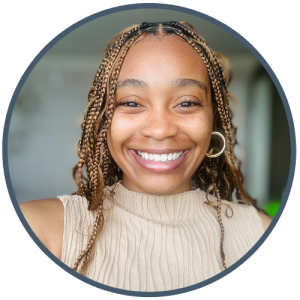
Kenisha L Webb, MS
Research Lab Manager
Department of Microbiology, Biochemistry and Immunology at the Morehouse School of Medicine (GA, USA)
Kenisha Webb, originally from St Louis, discovered her passion for science through summer research and IT programs at the University of Missouri–St. Louis (MO, USA). She earned a BS in Biology and Chemistry from Lane College (TN, USA) and an MS in Biomedical Sciences from North Carolina Central University (NC), where she studied proteins involved in chronic inflammation and liver damage in African Americans with diabetes. She later worked as a Social Science Research Assistant, conducting community-based studies and health outreach in rural North Carolina, which strengthened her commitment to addressing health disparities through scientific research. Currently, Kenisha is the Research Lab Manager in Dr K Sean Kimbro’s lab at Morehouse School of Medicine. In this role, she bridges bench science and community engagement, advancing research while mentoring students and supporting impactful health initiatives.
Disclaimer: The opinions expressed in this interview are those of the author and do not necessarily reflect the views of Bioanalysis Zone or Taylor & Francis Group.
For Research Use Only. Not For Use In Diagnostic Procedures.
In association with:

The Life Science business of Merck operates as MilliporeSigma in the US and Canada.
© 2025 Merck KGaA, Darmstadt, Germany and/or its affiliates. All Rights Reserved. The vibrant M, Millipore, and MILLIPLEX are trademarks of Merck KGaA, Darmstadt, Germany or its affiliates.