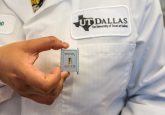
Rapid, low-cost saliva diagnostic tool developed for S100P

Original story from Queensland University of Technology (QUT; Australia).
QUT researchers have developed a simple 1-hour saliva test for a protein biomarker — S100P — that has been linked with oral, colon and pancreatic cancers, offering a potential point-of-care screening solution to identify and treat cancer early. The study was published in Talanta.
The team developed a rapid testing technique of saliva using paper coated in gold and silver nanoparticles to create a highly sensitive sensor that records the Raman spectrum of saliva samples. Surface-enhanced Raman scattering (SERS) is a spectroscopic technique that measures the inelastic scattering of monochromatic light to identify molecules.
“We used a rapid and inexpensive green synthesis with deep UV LED light to chemically link the antibodies to the surface so that we could observe and record the SERS of S100P for the first time,” explained Professor Kiriakous. “To maximise the integrity of the new method, we developed a target specific paper extractor chip to selectively bind to the biomarker in the saliva sample before the SERS measurement.”
You may also be interested in:
- Tampons Could Help Early Diagnosis of Ovarian Cancer
- Novel Tumor Marker Biosensor Developed
- 15-Minute Heart Attack Detection: UCLA’s Breakthrough Paper-Based Test
Kiriakous explained that identifying cancer or precancerous changes at an early stage allowed prompt intervention to slow or prevent disease progression:
“The protein S100P is one of the biomarkers investigated for cancer diagnosis and has been detected in ovarian, prostate, gastric, colorectal and breast cancers. Using a light-activated material on paper allows a system that avoids the complicated chemistry normally required in biomarker detection, and by using saliva avoids invasive blood or biopsy sampling. It also reduces the cost of biosensor manufacturing and eliminates the associated chemical waste to protect the environment. This method could shorten diagnosis time to minutes instead of hours or days and uses low-cost and portable materials.”