
Biomarkers without borders: uncovering ancestry and immune response links
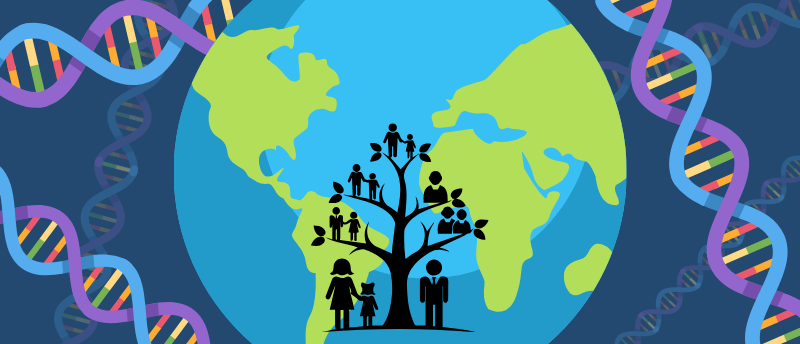
Kenisha’s work is driven by a lifelong passion for addressing health disparities in African American communities, inspired by early experiences and a personal mission to create equitable health outcomes. Through projects like Discovery of Us™, which explores the links between stress, inflammation, genetic ancestry and disease, the goal is to encourage meaningful dialogue, generate novel discoveries and contribute to precision medicine that targets root causes rather than symptoms.

Kenisha L Webb, MS
Research Lab Manager
Department of Microbiology, Biochemistry and Immunology at the Morehouse School of Medicine (GA, USA)
Kenisha Webb, originally from St Louis, discovered her passion for science through summer research and IT programs at the University of Missouri–St. Louis (MO, USA). She earned a BS in Biology and Chemistry from Lane College (TN, USA) and an MS in Biomedical Sciences from North Carolina Central University (NC), where she studied proteins involved in chronic inflammation and liver damage in African Americans with diabetes. She later worked as a Social Science Research Assistant, conducting community-based studies and health outreach in rural North Carolina, which strengthened her commitment to addressing health disparities through scientific research. Currently, Kenisha is the Research Lab Manager in Dr K Sean Kimbro’s lab at Morehouse School of Medicine. In this role, she bridges bench science and community engagement, advancing research while mentoring students and supporting impactful health initiatives.
- Your work is rooted in improving health outcomes within community-focused environments. What drives your passion for addressing health disparities, particularly in African American communities?
- Can you explain the goals of the Discovery of Us™ project and its significance in addressing health disparities?
- Your recent research provides insights into cardiometabolic disease mechanisms and immune response differences across sexes in African American populations. Could you talk us through the bioanalytical methods you used to assess inflammatory biomarkers in participants’ blood samples?
- When comparing multiplex cytokine assays, why did you choose Luminex® over say, MSD® or ELISA?
- How do you envision translating your recent findings into practical interventions to improve health outcomes?
- In celebration of Black History Month, what advice would you give your younger self, especially as a woman of color navigating the STEM field?
1. Your work is rooted in improving health outcomes within community-focused environments. What drives your passion for addressing health disparities, particularly in African American communities?
From a young age, around 10 years old, I was captivated by the Discovery Health Channel. Commercials for organizations like Feed the Children and St. Jude ignited a desire to contribute to scientific medicine in a meaningful way. Even then, I knew I wanted to be part of that change. As I grew older, I became increasingly aware of the systemic disadvantages faced by African American communities. Although I am originally from the Midwest, most of my academic training took place in the Southern United States, where I observed the same persistent disparities present in both regions, many of which directly impacted my own family. What began as an interest evolved into a personal mission, I began to ask myself: why work to help only some, when I could work to help all?
2. Can you explain the goals of the Discovery of Us™ project and its significance in addressing health disparities?
The goal of the Discovery of Us™ project is to examine the relationships among stress, inflammation, genetic ancestry and disease. Central to this work is fostering meaningful dialogue about the role genetic ancestry plays in shaping disease outcomes. By directly investigating these connections, the project confronts health disparities head-on and seeks to identify key factors that contribute to persistent gaps in health outcomes.
3. Your recent research provides insights into cardiometabolic disease mechanisms and immune response differences across sexes in African American populations. Could you talk us through the bioanalytical methods you used to assess inflammatory biomarkers in participants’ blood samples?
We used a custom multiplex immunoassay workflow, primarily Luminex® xMAP®–based assays, to quantify inflammatory cytokines from plasma samples. This approach allowed high-throughput, small-volume analysis with robust quality control, allowing us to reliably measure multiple inflammatory biomarkers and integrate them with demographic and clinical data.
4. When comparing multiplex cytokine assays, why did you choose Luminex® over say, MSD® or ELISA?
Other assay platforms, such as MSD® and ELISA, often require larger sample volumes that are too frequently run in duplicate along with more time-intensive protocols, and may yield results that are less sensitive or precise than those generated by Luminex® assays. Based on our experience over the years, Luminex® has consistently produced higher-quality data while conserving valuable sample material and reducing overall time demands, making it better suited to our research needs.
5. How do you envision translating your recent findings into practical interventions to improve health outcomes?
We aim to initiate meaningful conversations about the relationships between genetic ancestry, stress, inflammation and disease. Connections that are still not widely understood or, in some cases, even acknowledged. This project was intentionally designed to generate novel discoveries and to share those findings not only with the broader research community, but also directly with study participants.
From a long-term perspective, our work aligns with the goals of precision and personalized medicine. By deepening our understanding of these biological and social interactions, we hope to contribute to the development of targeted therapies that focus on curing disease rather than merely managing symptoms throughout an individual’s health journey.
6. In celebration of Black History Month, what advice would you give your younger self, especially as a woman of color navigating the STEM field?
I would advise my younger self to remain honest, courageous and confident. Scientific research can be a challenging space to navigate, but I belong here. Every sample carries a story that I will be eager to tell, and leading with God and integrity will always set me apart and take me to unimaginable heights.
Find more interview content here.
The opinions expressed in this interview are those of the interviewee and do not necessarily reflect the views of Bioanalysis Zone or Taylor & Francis Group.