Don’t sweat it: this skin patch tracks your vitamins
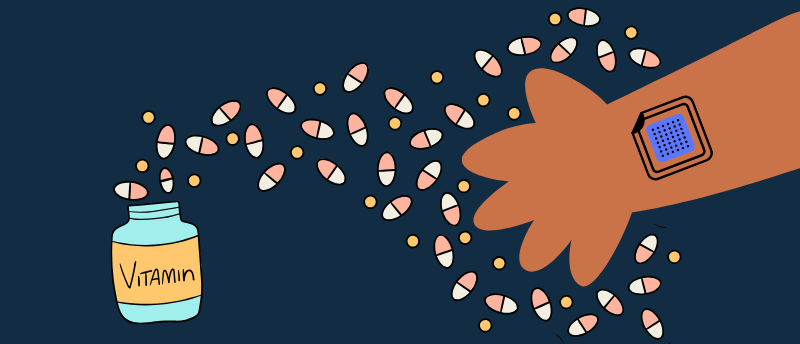
Scientists have created a wearable skin patch that measures vitamin levels in sweat in real time, offering personalized nutrition monitoring.
Researchers have developed a flexible wearable sensor capable of detecting vitamin levels through human sweat, offering a new approach to monitoring nutrition and health. The device, detailed in Nature Communications, was designed by a research team from China Agricultural University (Beijing, China) and Dalian University of Technology (Dailan, China) seeking non-invasive alternatives to traditional blood testing. The technology could eventually help users track nutrient deficiencies and dietary responses continually from home.
Micronutrient deficiencies affect billions of people globally and are linked to grave health impacts, such as fatigue, anemia, weakened immunity and neurological disorders. Current testing methods rely largely on blood analysis, which can be costly, inconvenient and unsuitable for frequent monitoring. Scientists have shown growing interest in wearable sweat sensors due to their accessibility for measuring biological markers. However, monitoring micronutrients in sweat presents a particular challenge, as these compounds exist in exceptionally low concentrations.
The new device consists of a thin skin patch integrated with a multiplexed electrode array capable of measuring six vitamins simultaneously, including vitamins B1, B2, B7, B9, B12 and D. Researchers enhanced the patch electrodes with gold nanoflowers and specialized carbon materials to improve electron transfer and surface area for biomolecule attachment, achieving high sensitivity at extremely low concentrations.
Vitamin-specific antibodies and binding proteins were anchored to the electrode surface through chemical activation, where vitamins and enzyme-labeled vitamin analogs vied for available binding sites, generating quantifiable electrochemical signals. The system also used mild electrical stimulation to generate sweat, collecting the fluid via microfluidic channels to transport samples across the sensor surface. Data were then transmitted wirelessly to a smartphone for real-time analysis.
You may also be interested in:
- Ask the Experts: quantifying translational biomarkers
- Tampons could help early diagnosis of ovarian cancer
- Microscopic fiber sensors for real-time cancer detection
Testing the patch in human trials focused mainly on vitamin B9, or folic acid, with levels of B9 increasing more than threefold within hours after supplementation, demonstrating the patch’s ability to track rapid physiological changes accurately. Interestingly, lifestyle factors like smoking were associated with lower vitamin B9 concentrations, highlighting the potential for population-specific nutritional monitoring. Furthermore, in validation comparisons against ELISA measurements, the team reported that the sensor detected all six vitamins at nanomolar concentrations and closely matched laboratory-based ELISA testing.
Although still in experimental stages, the patch highlights the growing popularity and promise of sweat-based biosensors in personalized healthcare. Future versions could integrate with AI-powered health platforms to provide continuous nutritional insights. However, larger clinical studies and stronger links between sweat and blood vitamin levels will be needed before the technology becomes more widely available.