New blood test technology accelerates drug detection in critical situations
Researchers at King’s College London (UK) have developed a rapid blood testing method that could provide reliable results significantly faster than current approaches, assisting in increasing the speed and accuracy of decision-making in emergency departments.
Emergency departments frequently see patients presenting with acute recreational drug toxicity, yet real-time confirmatory laboratory testing to identify the drugs involved is seldom available. As a result, clinicians are often left depending on patients’ self-reported drug use and observable clinical symptoms; an approach that can be often unreliable, particularly when patients are confused, drowsy or unaware of any drugs they have taken.
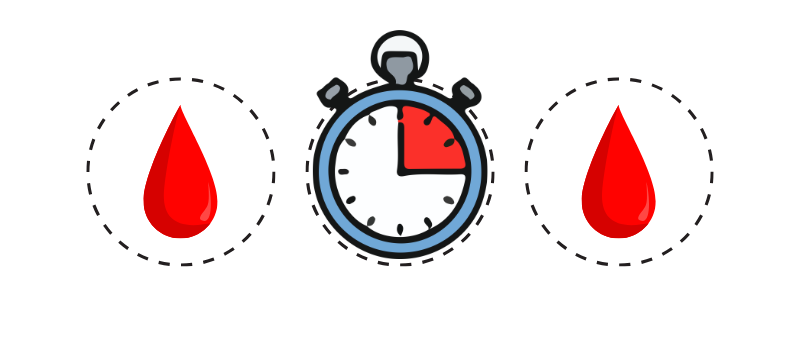
Their study, published in the journal Analyst, investigates the potential of adapting paper spray ionization mass spectrometry (PSI-MS) for quicker application in clinical settings. This technique enables the detection of drugs directly from a small drop of blood dried on paper, eliminating the need for time-consuming sample preparation or any complex laboratory procedures. Previously, the method required samples to dry for at least 60 minutes before analysis, restricting its efficiency in urgent care scenarios.
The paper explores whether significantly shorter drying times could still deliver accurate and reliable results. Using PSI-MS, whole blood samples containing ten common drugs of abuse were analyzed, comparing samples dried for durations of 10, 20, 40 and 60 minutes. The samples were then evaluated for their accuracy, consistency and reliability, with the results revealing that blood spots dried for just 10 minutes produced results as accurate and consistent as those dried for an hour.
You may also be interested in:
- Novel blood testing technology for Alzheimer’s Bio-Hermes-002 study
- Patient centric blood sampling and analysis for diagnostics and laboratory medicine
- LC–MS for protein biomarkers: an interview with Ashley Phillips
Regardless of drying time, the technique reliably identified all tested drugs, and the performance of the mass spectrometry equipment remained unaffected. These findings suggest that confirmatory toxicology results could be available within approximately 15 minutes of blood sample collection, which is a major advancement over current laboratory methods. Faster drug identification could enable clinicians to provide more targeted treatments and increase patient safety in emergency care settings.
“In drug-related emergencies, clinicians are often forced to act with limited or unreliable information. Our results show that rapid mass spectrometry testing could provide dependable drug identification in a clinically meaningful timeframe, with clear potential to improve patient safety in acute settings,” explained Senior author Dr Vincenzo Abbate, Reader in Bioanalysis in the School of Cancer & Pharmaceutical Sciences at King’s College London.
Currently, liquid chromatography-tandem mass spectrometry is regarded as the gold standard for toxicology testing due to its exceptional sensitivity and selectivity. However, the method is time-consuming, resource-intensive and rarely available to use in emergency settings. PSI-MS offers a simpler alternative, requiring no additional chemicals, complex preparation steps, or specialized laboratory facilities, making it more practical for routine use in hospitals.
Although additional research is required before PSI-MS can be clinically implemented, the study marks a promising advancement toward faster drug toxicology testing in emergency care.