Biochip uses AI to identify genetic markers in 20 minutes
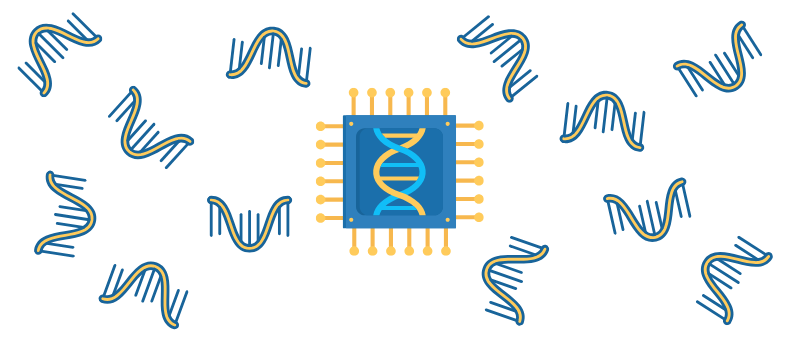
The biochip, paired with AI, enables rapid and accurate detection of microRNAs, promising early disease diagnosis and personalized medicine.
Scientists at Nanyang Technological University (NTU Singapore) have developed a biochip that uses AI to detect microRNAs—tiny genetic markers that play significant regulatory roles in diseases like cancer and heart disease. Published in Advanced Materials, this innovation reduces microRNA detection time from hours to just 20 minutes, offering a faster and more precise alternative to traditional methods like PCR.
MicroRNAs play a critical role in regulating genes and are associated with various diseases, including cardiovascular conditions, cancer and neurodegenerative disorders. Despite their promise as non-invasive biomarkers of disease, detecting these markers accurately and efficiently has long been a challenge due to their small size and low concentrations in biological samples. NTU’s new platform addresses these hurdles, combining nanophotonic technology with AI to enhance sensitivity and streamline analysis.
The biochip integrates a nanophotonic chip with AI-driven image analysis, enabling thousands of microRNA signals to be captured and analyzed in a single snapshot. Using a tiny drop of blood, the system can detect multiple biomarkers without the need for amplification or complex preparation. The nanophotonic chip features a light-trapping nanocavity that boosts fluorescent signals that glow when a probe binds to its target microRNA, making it possible to identify even single microRNA molecules with similar sequences. The team even designed the prototype to include a color camera and a mobile app for rapid analysis, making it user-friendly and accessible.
In addition, the platform employs a deep-learning model, Mask R-CNN, to automatically analyze microscopic images, eliminating manual counting and reducing human error. Tests on lung cancer cells demonstrated the device’s ability to detect microRNAs with over 99% accuracy, even at extremely low concentrations.
You may also be interested in:
- Detecting tumor markers with point-of-care biosensing platform
- Ask the Experts: quantifying translational biomarkers
- Microscopic fiber sensors for real-time cancer detection
The biochip successfully measured three microRNAs linked to non-small cell lung cancer—miR-191, miR-25 and miR-130a—directly from human lung cancer cell extracts. It also performed reliably when synthetic microRNAs were added to biological samples, demonstrating its potential for real-world applications.
“In the future, it may be possible to use a blood or saliva sample in an automated system that screens for hundreds or even thousands of biomarkers at once. This could support large-scale screening and may help advance personalized medicine,” explained NTU Associate Professor Chen Yu-Cheng, who led the study at the School of Electrical and Electronic Engineering.
With further trials and collaborations, NTU aims to scale up the technology for broader applications, supporting rapid biomarker detection for a wide range of diseases.
“A platform that can accurately detect multiple microRNAs could have huge clinical applications, including earlier detection of cancer, risk stratification of patients, and monitoring of treatment response or disease recurrence. Such a technology could potentially enable more accessible and precise clinical decision-making in oncology and across a range of diseases,” commented Associate Professor Sunny Wong Hei, a Consultant in the Department of Gastroenterology and Hepatology at Tan Tock Seng Hospital (Singapore).